Monday, October 21, 2013
Religion plays its part in desperation as help towards finding a way out. Keller Dover (Hugh Jackman) is a believer, a man taught to be prepared for everything that naturally comes to us in life. His world is destroyed when daughter Anna (Erin Gerasimovich) and her friend Joy (Kyla Drew Simmons) go missing, and naturally he and wife Grace (Maria Bello) are completely lost.
Alex Jones (Paul Dano) is brought into custody as a suspect, but inconclusive evidence leads to his release without charges. Keller's desperation comes to the fore when he believes Alex holds the truth, and sets his own plan in motion to seek it. Detective Loki (Jake Gyllenhaal) is at odds with Keller, not out of his doing, and his frustration increases as his solid reputation for solving crimes does him no justice in this case.
Keller is a formidable figure, losing his strength and turning to violence against those he believes have wronged him. He looks to God for his salvation and the return of the girls, and is one of many to play the blame game. Keller and Grace are more obvious in their distress than Joy's parents, Franklin (Terrence Howard) and Nancy (Viola Davis) - but they too have their strong views on those they see as responsible.
Aaron Guzikowski has thrown characters of all sorts into a story about family, trust and helplessness. His screenplay weaves Detective Loki's investigations with Keller's own journey to find the truth, adding in the impact the kidnapping takes on both of the families as well as Alex and his aunty Holly (Melissa Leo). Everyone is a prisoner, whether behind iron bars or in their minds.
Jackman is vulnerable as Keller, a man so scared of how his situation came to be he becomes someone else. Bello as the grieving mother is heartbreaking, and Gyllenhaal is great to watch as a bad-arse detective filled with doubt. But Dano's creepy suspect Alex is simply frightening, conveying with so few words a picture of secrecy and fear. Scenes between Dano and Jackman are the film's highlight.
With child kidnapping a contentious topic, films such as these show how easy it is for a family to collapse under its foundations. Villeneuve gives his cast a big opportunity to explore those emotions of helplessness and desperation, and they grab it. This tense thriller shows the strengths and weaknesses of family units as well as individuals when an unseen force comes from nowhere.
Rating: 4/5
Published in the Daily Liberal (Dubbo), Western Advocate (Bathurst), Parkes Champion Post and Midstate Observer (Orange) and Rotten Tomatoes from Saturday 19/10/2013
MISSED LAST WEEK'S REVIEW? See what I thought of 2 Guns.

Saturday, July 27, 2013
The Wolverine (M)
EXCLUDING vigilantes like Kick-Ass and The Watchmen crew, the X-Men are the outcasts of the superhero world. Superman might be an alien who grew up on Earth and Spider-Man a kid hiding in the shadows, but this class of A-grade mutation gives real reason to be disgusted with life.
Wolverine's a pretty angry guy, characterised by his claws and mean facial chops. His immortality makes for physical invincibility but emotions run deep within him for things he has failed to forgive or forget.
The ups and downs of Jackman's time fighting for justice have now been shown in six films, the most for a superhero in any single role. Wolverine's been through a lot, and his story is not near a closing chapter.
The second Wolverine stand-alone film takes place after the events of X-Men: The Last Stand, which left him broken. Wolverine (Hugh Jackman) still mourns the death of Jean Grey (Famke Janssen) and has removed himself from a life of fighting crime.
Yukio (Rila Fukushima) sees that hiding does him no favours; she finds him on behalf of Yoshida (Hal Yamanouchi), someone wishing to repay a debt for a favour given long ago. Wolverine's reluctance to face his demons is challenged as he goes to Japan to grant Yoshida a dying wish.
 |
| Photo: aceshowbiz.com |
The story from Mark Bomback, Scott Frank and Christopher McQuarrie shows Wolverine at his weakest, a man fragile from his actions and unsure about the value of life. His immortality is an entrapment, a curse that a large part of him so dearly wants to be rid of.
Ridding himself of that immortality is a temptation Wolverine comes across, as is Yoshida's granddaughter Mariko (Tao Okamoto). As Mariko finds herself in danger, Wolverine's questions about existence become more evident.
The Japanese setting lends itself nicely with themes of tradition, honour and respect. Wolverine, in his fight to protect Mariko, takes those all on board and tries to connect them with an angry soul.
As a stand-alone film, it's a story about a man reclaiming his purpose. Director James Mangold weaves a story that blends the past and present while questioning the future. Japan provides a beautiful backdrop to the tale at hand.
Within the X-Men universe, it's an important chapter. Wolverine, the most well-known character of the group, is presented at his most vulnerable. It's a common thread within superhero films these days, but to see one at their weakest is to appreciate their strongest attributes.

The closure for Wolverine is well crafted and should give fans what they were looking for. But a post-credits scene is just one thing which proves his story is not done with just yet.
Rating: 3.5/5
Saturday, December 15, 2012
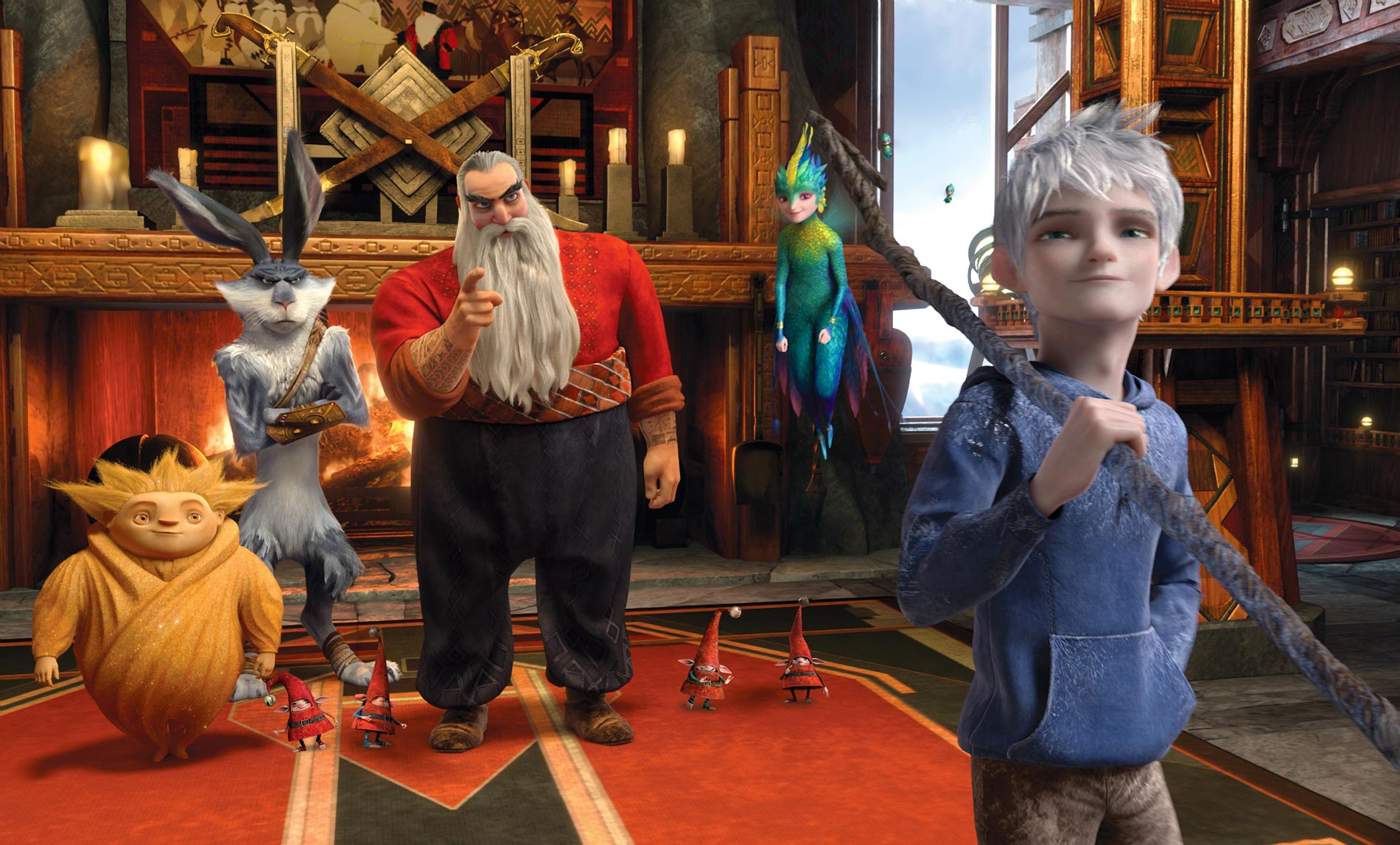
Rise of the Guardians 2D (PG)
***
Anyone from Generation Y is likely to know the story of one nutty professor through Eddie Murphy from the mid-90s, but true credit for this story of multiple personalities falls squarely on the shoulders of Jerry Lewis.
Of course, he was inspired by works of the horror genre before him to concoct the story of university professor/scientist Julius Kelp, buck-toothed and the scapegoat for everyone’s jokes. Only Stella (Stella Stevens) has respect for her teacher, and he in turn is revealed to have hidden feelings for her.
Kelp’s frustration at being unaccepted culminates in a potion that turns him into Buddy Love, a good-looking, smooth and talented alter-ego. But his hopes at gaining Stella’s affections turn sour as he can’t stop himself from being one of cinema’s most arrogant characters, not to mention the effects taking the potion is having on him.
As Julius, Lewis is as whiny as a spoilt five-year-old, but for some will still manage to delight with his wise-cracks; alter-ego Buddy is irritating enough to make you wonder just why Stella sticks around. But Lewis gels it together nicely to create an ending unexpectedly sad, metaphorically speaking out for all those who are bullied, young and old, as he realises his lesson.
MISSED LAST WEEK'S REVIEWS? See what I thought of Pitch Perfect and A Nightmare On Elm Street.


 Posts
Posts


